Paper choice has become a more practical sourcing decision as the pre-roll category grows. In the 2026 pre-roll market survey, 49.6% of participating companies offered refined white paper, 48.8% offered natural brown, and 35.4% offered organic hemp. U.S. pre-roll revenue grew 9.8% year over year in 2025, while unit sales increased 18.6%.
For B2B buyers, those numbers point to a wider product mix rather than one standard cone format. The main pre roll paper types now sit alongside choices about cone size, filter tip, filling equipment, branding, and packaging.
The paper should fit the SKU and the production process. That is more useful than choosing a material from its name alone.
Rice paper, hemp paper, and natural brown unbleached paper can all be used in custom pre-roll programs. The material, however, is only the starting point. Paper weight, cone dimensions, tip construction, adhesive, and filling method can change how the finished cone performs in production.
For purchasing teams comparing paper tipped pre-rolled cones, it makes sense to review the paper together with the complete cone specification.
Rice paper pre rolled cones give brands another paper option when developing a custom cone range. SILICLAB currently includes rice paper among the available papers for customized pre-rolled cones, together with options for paper weight, cone dimensions, tip style, tip color, and tip branding.
For a commercial project, the RFQ should go beyond “rice paper cones.” The buyer should confirm the required paper specification, cone size, filter dimensions, target fill, and production method.
This becomes especially important when a brand is moving from a small sample to bulk pre rolled cones. The approved sample should match the intended filling and packaging setup before the order moves to volume production.
Hemp pre rolled cones are already a substantial part of the market, with organic hemp appearing in 35.4% of the 2026 industry survey responses. They also give brands a clearly defined material option that can sit alongside white or natural brown paper SKUs.
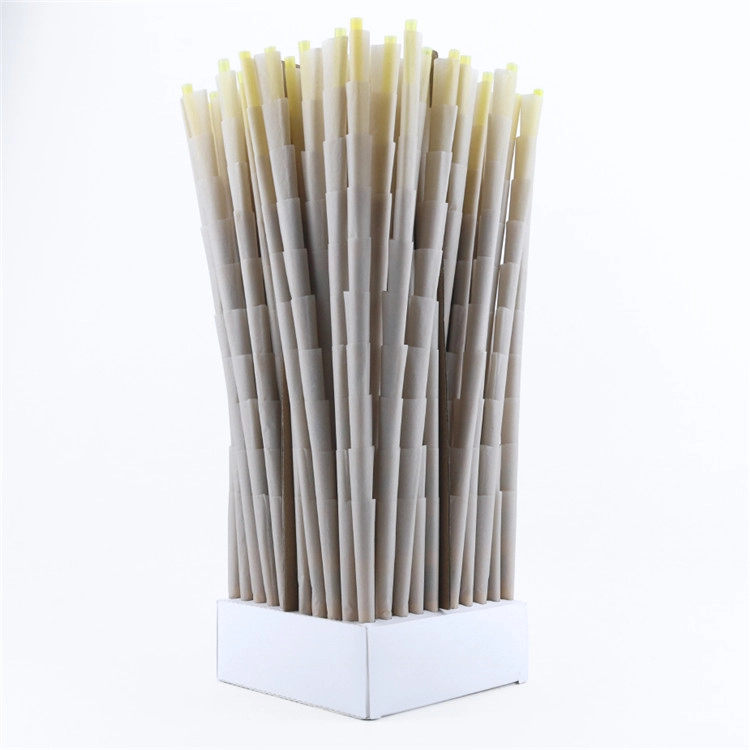
SILICLAB’s 109mm organic hemp pre-rolled cones use 100% organic unbleached hemp stalk paper, kraft paper filter tips, and gum arabic adhesive. The standard product is a 109mm king-size cone, with custom dimensions and filter-tip branding available for project requirements.
For buyers comparing organic hemp pre rolled cones, the useful questions are straightforward: Does the size fit the target fill? Does the cone fit the production setup? Is the tip specification right for the SKU? Those points matter more than a material label by itself.
Unbleached pre rolled cones are commonly associated with a natural brown appearance, but unbleached paper should not automatically be treated as hemp paper. Fiber material and paper treatment are separate specifications.
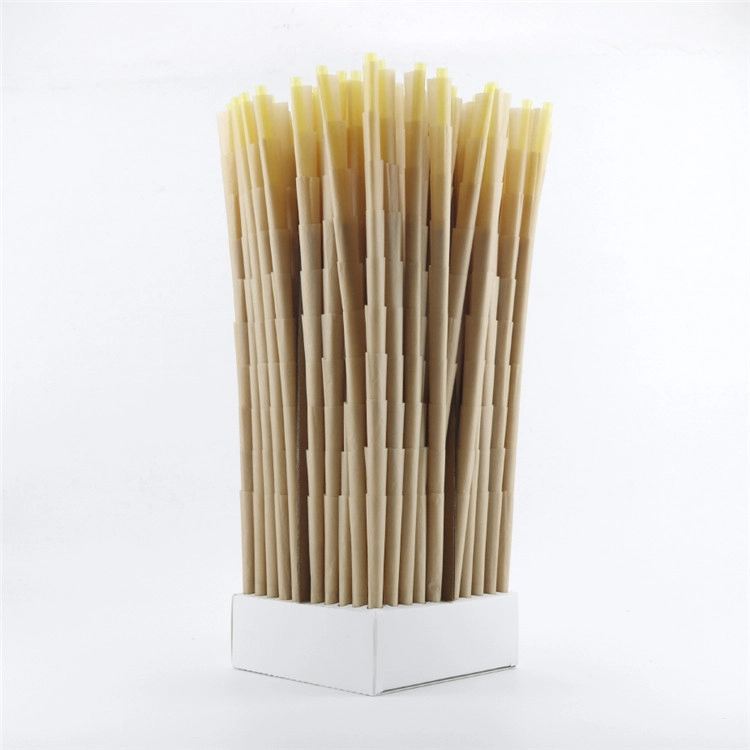
For example, SILICLAB’s natural brown pre-rolled cones use unbleached wood-pulp paper rather than hemp paper. They are paired with kraft paper tips and gum arabic adhesive.
That distinction matters when a purchasing team compares quotations. Two natural-looking cones can have different paper specifications, so the material should be clearly stated in the purchase specification and approved sample.
Once the basic paper type is selected, buyers need to bring the discussion back to the finished SKU. A cannabis brand may use different papers across different product lines, and there is no commercial reason every cone has to share the same material.
The more useful comparison is how each option fits the brand position, required specification, and production process.
| Buyer consideration | Rice Paper | Hemp Paper | Brown Unbleached Paper |
| Paper category | Rice paper option | Hemp-based paper | Unbleached paper |
| Key RFQ check | Paper specification and weight | Hemp specification and weight | Fiber source and paper weight |
| Branding decision | Review with tip and artwork | Review with natural-positioned SKU | Review with natural brown presentation |
| Production decision | Test intended cone | Test intended cone | Test intended cone |
| Recommended validation | Approved production sample | Approved production sample | Approved production sample |
The table is not meant to rank one paper above another. Its purpose is to keep the purchasing conversation tied to measurable specifications.
Material choice is only one part of pre roll paper specification. GSM describes paper weight per square meter, while porosity relates to airflow through the paper. These are technical variables, and they should be reviewed together with the cone dimensions and filling method rather than used as standalone quality claims.
For a B2B project, the practical goal is consistency between the approved sample and the bulk order.
A request for “hemp cones” or “rice paper cones” leaves too many details open for an accurate commercial comparison.
The specification should cover paper type and weight alongside the finished cone dimensions. SILICLAB supports custom paper weight as part of its custom pre-rolled cones and tubes service.
For buyers searching for custom pre rolled cones, this is an important distinction. Customization is not simply a logo change. Paper, size, tip, and branding need to work as one finished product.
A cone can look correct on a specification sheet and still need adjustment on the filling floor. Paper selection therefore has to move from material comparison to production validation.
That matters even more as pre-roll volume moves toward multipacks. In Q1 2026, multipacks represented 54.2% of U.S. pre-roll sales and 86.3% in Canada. More units per retail pack make repeatability across individual cones increasingly important.
Before approving a new paper or cone specification, test the intended sample on the tray or filling equipment planned for production.
Check:
Commercial sourcing is different from checking a handful of samples by hand. A small handling issue can repeat thousands of times in a production run.
Once the cone has passed production testing, the next question is how it fits the finished SKU. Paper, filter tip, logo, and retail packaging are seen together by the customer, so purchasing and brand teams should make those decisions around the same approved product.
This is also where paper choice can help separate one SKU from another without changing every component.
A lighter paper, hemp paper, and natural brown paper will create different visual directions even when the same brand identity is used.
For custom projects, it is better to review logo placement and tip design on a physical sample rather than approving each component separately. The cone does not need to carry every visual element. In many cases, the paper can stay simple while the filter tip and outer pack handle most of the branding.
For purchasing teams, the practical approach is to develop the cone and packaging as one finished SKU.
By the quotation stage, a paper preference should become a defined purchase specification. This makes supplier quotations easier to compare and reduces changes after sampling.
When evaluating a pre roll cone manufacturer, check whether each quotation is based on the same paper, cone dimensions, tip, branding, packaging, and order requirements. Otherwise, two prices may be describing two different products.
For pre rolled cones wholesale or private-label projects, include:
A clear RFQ does not need to be complicated. It simply gives the buyer and manufacturer the same reference before sampling starts.
Rice paper, hemp paper, and natural brown unbleached paper can all fit commercial pre-roll programs. The right choice depends on the finished SKU, paper specification, filling setup, branding, and volume requirements.
For brands comparing pre roll paper types, material selection should lead to a sample that can be checked in the real production process. That is the point where a paper choice becomes a workable manufacturing specification.
For a new custom or wholesale project, send SILICLAB the required paper type, cone size, tip specification, filling method, quantity, and packaging needs through the wholesale quotation page. The next step can then focus on the actual sample and order specification rather than a generic cone request.
A: There is no single paper type that fits every SKU. Buyers should compare paper specification, cone size, filling method, branding requirements, and the approved production sample before choosing between rice, hemp, or brown unbleached paper.
A: Hemp refers to the fiber material, while unbleached describes the paper treatment. An unbleached cone is not necessarily made from hemp. SILICLAB currently offers hemp-paper cones as well as natural brown cones made from unbleached wood-pulp paper.
A: Confirm the paper specification, required paper weight, cone dimensions, filter-tip specification, branding, packaging, filling method, and sample before bulk production.
A: Machine compatibility depends on the complete cone specification, including paper weight, dimensions, tip size, cone profile, and the filling setup. The intended cone should be tested on the actual tray or machine before a volume order.
A: Yes. SILICLAB’s current custom pre-roll options include rice paper, hemp paper, and brown unbleached paper, along with custom paper weight, cone or tube dimensions, tip styles, tip branding, and packaging. Final specifications are confirmed during quotation and sampling.